Plastic recycling machines by Jiangsu PURUI
Washing lines, pelletizing lines and auxiliary machines manufactured by Purui Machinery in Jiangsu, China, since 2006. Each line is configured for how dirty your material is and what you will make from the pellets.
Washing lines
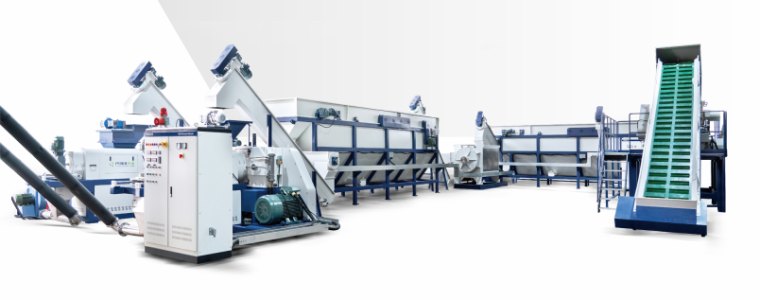
PE/PP film washing line
Mainly for agricultural film and greenhouse film, post-consumer packaging film and woven bags. Output 500 to 2,000 kg/h. The washing steps are designed around how dirty your material is: how much sand and soil it carries, other impurities, labels and so on. Please send photos of your film or bales before we quote.
PP woven bag washing line
For PP woven bags, raffia bags and jumbo bags, including heavily soiled bags. Pre-shredding and repeated pre-washing remove sand and soil before the friction washer.
| Capacity (kg/h) | 500 | 800 | 1,000 | 1,500 | 2,000 |
|---|---|---|---|---|---|
| Moisture after squeeze dryer | 1 – 3 % | ||||
| Water consumption, standard line | 15 – 20 t/h | ||||
| Recommended water treatment system | 25 m³/h | ||||
Washing line layout, step by step
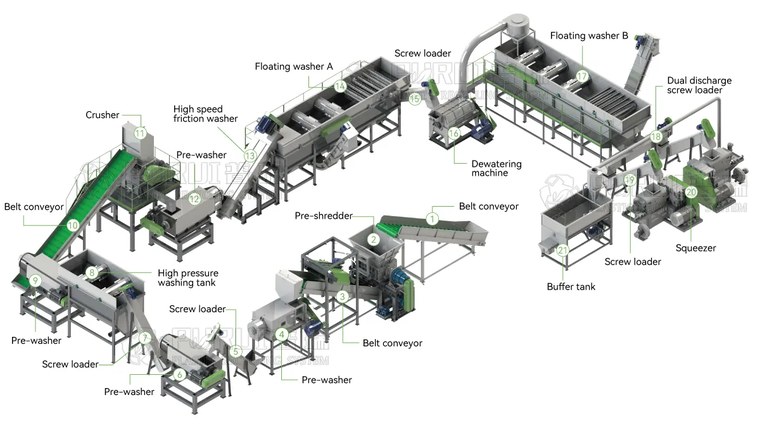
- Belt conveyor
- Pre-shredder
- Belt conveyor
- Pre-washer
- Screw loader
- Pre-washer
- Screw loader
- High-pressure washing tank
- Pre-washer
- Belt conveyor
- Wet crusher
- Pre-washer
- High-speed friction washer
- Floating washer A
- Screw loader
- Dewatering machine
- Floating washer B
- Dual-discharge screw loader
- Screw loader
- Squeeze dryer (squeezer)
- Buffer tank
Pre-shredding and repeated pre-washing (stations 2 to 12) take out sand and soil before the friction washer. For cleaner material, some of these stations are left out: the steps are chosen by how dirty your material is.
Pelletizing lines
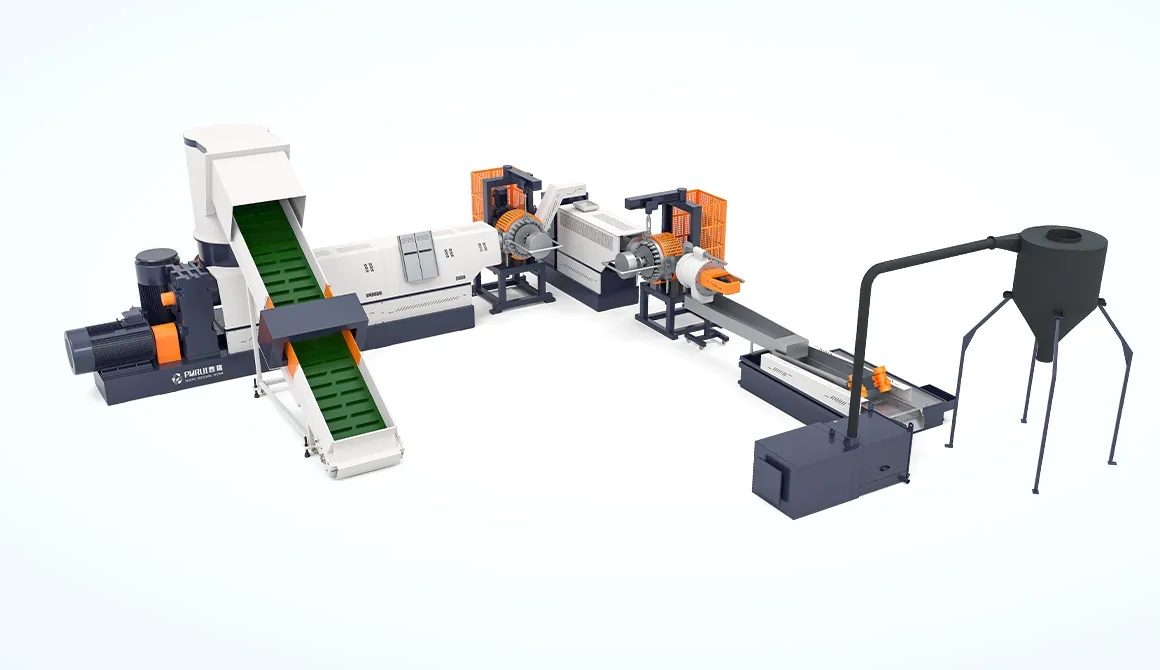
Film pelletizing: ML series
For clean, dry BOPP, PP, HDPE, LDPE, LLDPE, PS, PLA and PET film scrap, non-woven fabric, woven bags and fibre, fed without washing. Washed film flakes from a washing line go to an SJ two-stage line instead (see below). Output below is per material; the actual figure depends on bulk density, moisture and contamination.
| Model | Screw diameter | PP (kg/h) | HDPE (kg/h) | LDPE (kg/h) |
|---|---|---|---|---|
| ML75 | 75 mm | 100 | 120 | 150 |
| ML85 | 85 mm | 120 | 150 | 180 |
| ML100 | 100 mm | 200 | 300 | 400 |
| ML130 | 130 mm | 400 | 500 | 600 |
| ML160 | 160 mm | 600 | 700 | 1,000 |
| ML180 | 180 mm | 800 | 1,000 | 1,200 |
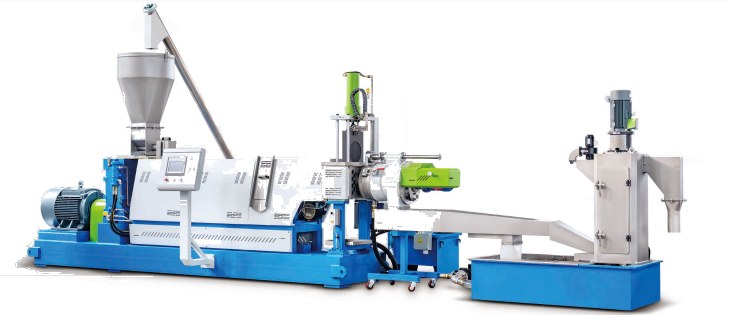
Rigid plastic pelletizing: SJ series
For washed film flakes, HDPE bottle flakes, crushed rigid PE and PP, and PP, PC and ABS regrind: buckets, small hollow bottles, milk bottles and other rigid material. Available as single-stage or two-stage lines. Filtration options are covered in the screen changer guide.
| Model | SJ100 | SJ120 | SJ140 | SJ150 | SJ160 | SJ180 | SJ200 |
|---|---|---|---|---|---|---|---|
| Screw diameter (mm) | 100 | 120 | 140 | 150 | 160 | 180 | 200 |
| L/D | 18 – 42 | ||||||
| Screw speed (r/min) | 10 – 150 | ||||||
| Output (kg/h) | 250–350 | 300–400 | 500–600 | 600–800 | 800–1,000 | 900–1,200 | 1,000–1,500 |
PET bottle flakes pelletizing: SJ series with pre-drying
PET absorbs moisture from the air. If damp flakes go straight into a hot barrel, the water breaks the polymer chains (hydrolysis) and the intrinsic viscosity (IV) drops. Low-IV pellets are hard to sell into demanding uses such as filament spinning or bottle-grade resin. This line dries the flakes before they reach the extruder and melts them gently, so the pellets keep their IV.
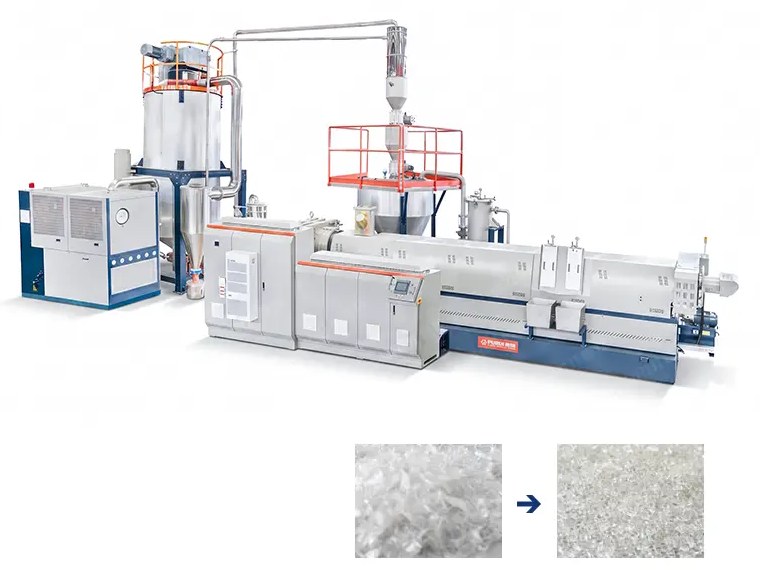
| Screw diameter | 160 mm |
| Main motor | 200 kW |
| Output | 800 – 1,000 kg/h |
| Input material | Washed post-consumer PET bottle flakes, moisture ≤ 1.0 % |
| IV loss, flakes to pellets | < 0.04 dL/g |
How the line protects IV
- Hot dehumidified-air pre-drying. A drying hopper sits directly above the extruder inlet. Hot, dry air passes through the flakes continuously, so the moisture is removed before they reach the feed throat. No vacuum drying system is needed.
- First-in, first-out hopper. In many drying hoppers the material runs down the centre while older flakes hang on the walls, so drying time varies. This hopper is shaped for true first-in, first-out flow: every flake gets the same time and heat, moisture is even at the feed throat, and motor load stays stable.
- Screw designed for gentle melting. The screw profile keeps shear and heat low. Together with the pre-drying, IV loss is held below 0.04 dL/g.
The less IV you lose in pelletizing, the less virgin resin you need to blend in downstream.
PET line FAQ
What material is the SJ PET flakes pelletizing line designed for?
Washed, cleaned and sorted post-consumer PET bottle flakes.
How does the pre-drying prevent PET degradation?
Hot dehumidified air passes continuously through the flakes in a single drying stage and removes the moisture before extrusion. Without that moisture, the resin does not hydrolyse when it melts.
What is the maximum moisture of the incoming flakes?
The line is designed for flakes with an initial moisture content of 1.0 % or less.
Why does first-in, first-out flow in the drying hopper matter?
Every flake stays in the hopper for the same time, so the whole batch is dried evenly and the extruder sees constant moisture.
How much IV is lost from flakes to pellets?
Less than 0.04 dL/g, thanks to controlled drying and a screw designed for gentle melting.
For a quotation, send: the IV and moisture of your flakes, main contaminants (PVC, labels, glue, metal), target output and what the pellets will be used for.
Recycling and modification line: single screw + twin screw
A two-in-one line for recycling and compounding in one pass. The single-screw first stage melts and filters the recycled material; the melt then goes straight into the twin-screw second stage, where fillers, glass fibre, pigments or additives are added. The result is modified recycled pellets that can be used far more widely than plain regrind.
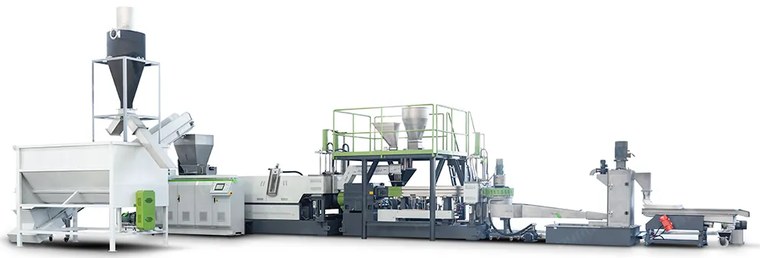
| First stage | Single-screw extruder, screw diameter 110 mm, motor 132 kW |
| Second stage | Twin-screw extruder, screw diameter 75 mm |
| Line output | 600 kg/h |
| Power configuration | Set according to the material and formula |
Typical applications:
- Filling: PE/EVA + calcium carbonate, talc, TiO2, carbon black
- Glass fibre or carbon fibre reinforcement: PP, PA, PBT, ABS, PC, POM, PET
- Colour and black masterbatch: PE, PP, ABS, PS, EVA, PET + pigment
- Flame-retardant compounds and masterbatch: PP, PA, ABS, PBT, EVA
- Alloys: PC/ABS, PA/ABS, PP/EPDM, PP/SBS
- Biodegradable compounds: PE, PLA, PBAT + starch and additives
- Cable compounds: PVC, PE, low-smoke halogen-free
- Thermoplastic elastomers: TPU, TPE
The HDPE milk bottle project below ran on this line configuration.
Case study: food-grade HDPE milk bottle flakes
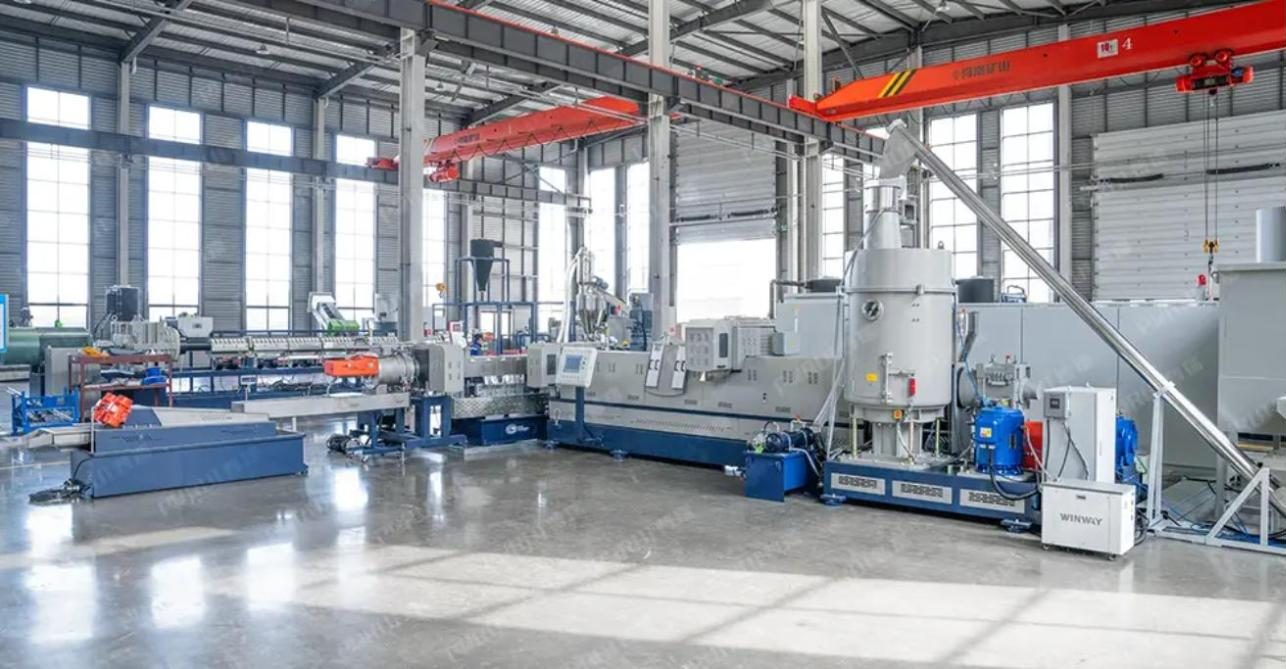
Material: post-industrial and post-consumer HDPE milk bottles, supplied as pre-washed flakes.
Goal: white or ivory pellets with a stable melt flow index, clean enough to go back into blow-moulded bottles.
The challenge
- Odour. Residual milk protein turns sour in the melt unless it is degassed properly.
- Colour. Any burning or black spots ruin the value of white HDPE.
- Melt flow. The pellets must keep a consistent MFI to run again on blow-moulding machines.
How the line was configured
- Forced side feeding. Light, irregular milk-bottle flakes bridge in a plain hopper. A side feeder keeps a constant, pressurised flow into the first extruder.
- Low-shear screw. The screw profile avoids over-heating the HDPE, which protects chain length and keeps the colour white instead of yellow.
- Two-stage filtration. The first stage removes coarse contamination; the second stage uses a hydraulic screen changer down to 80–100 μm.
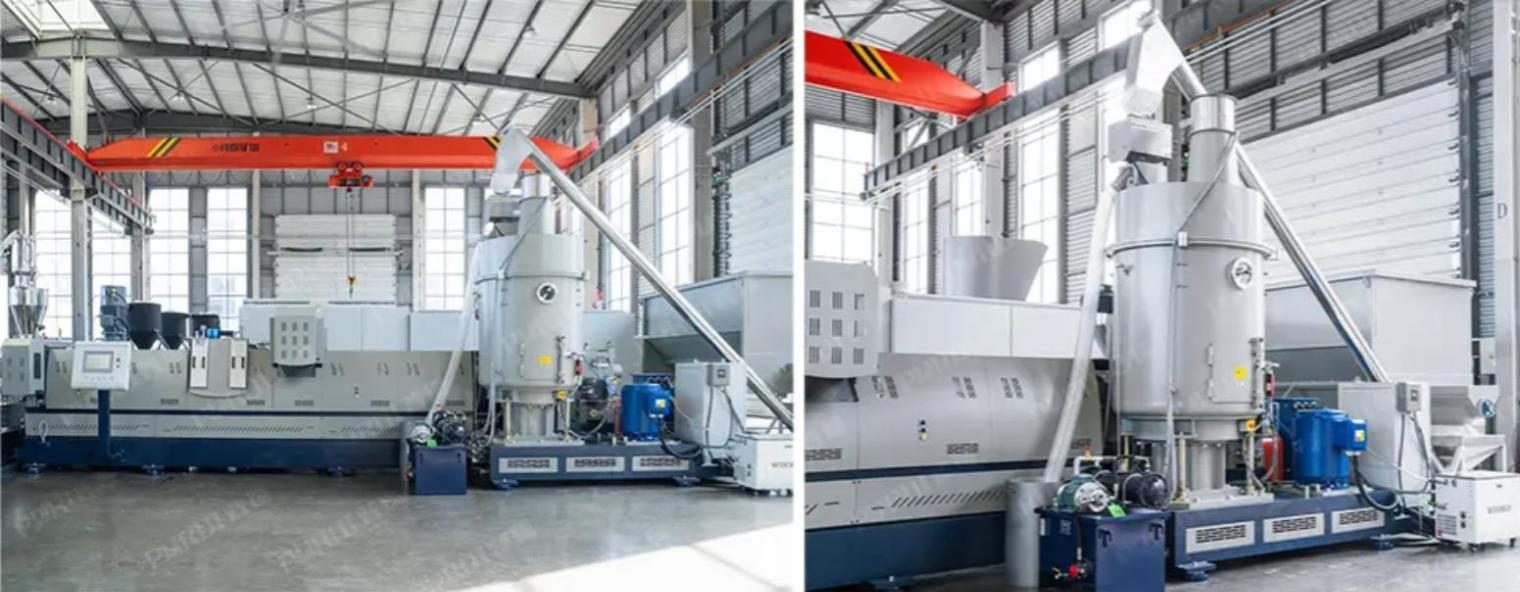
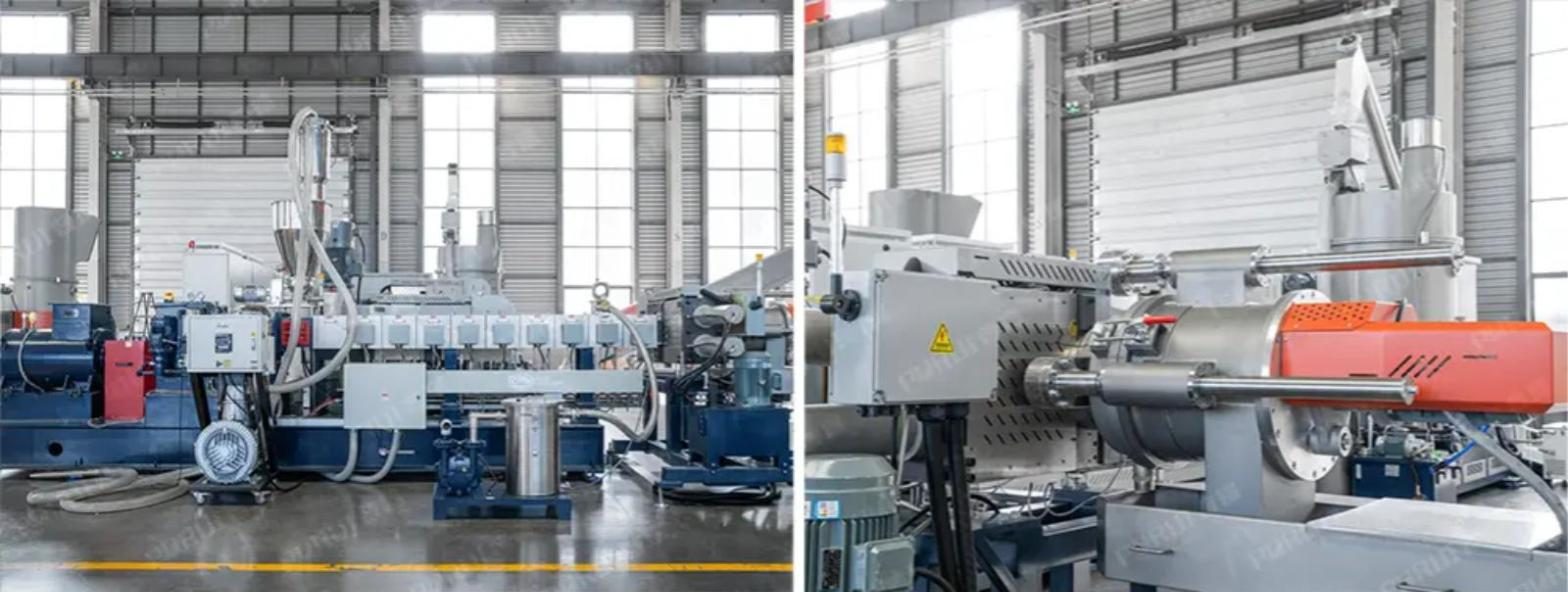
Results reported by Jiangsu PURUI
- The pellets passed the customer's sensory test for residual odour.
- No black spots, after dead zones in the die head were removed.
- The customer replaced 30% of its virgin HDPE with the recycled pellets.
Auxiliary machines
Double-shaft shredder: XD-E series
Breaks bulky plastic waste such as film rolls, woven bag bales, crates, drums, pipes and pallets into pieces before washing or pelletizing. The same machine also handles wood, rubber, e-waste and packaging drums. Output is 500 to 1,500 kg/h, depending on the material.
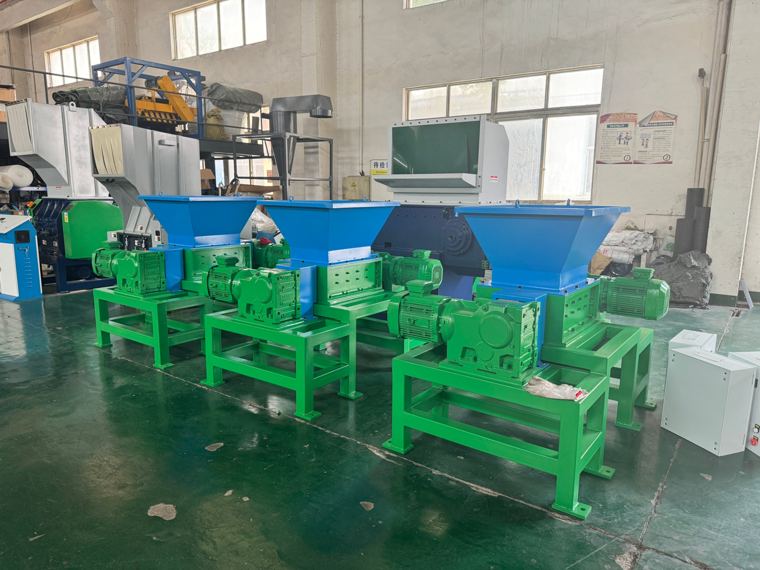
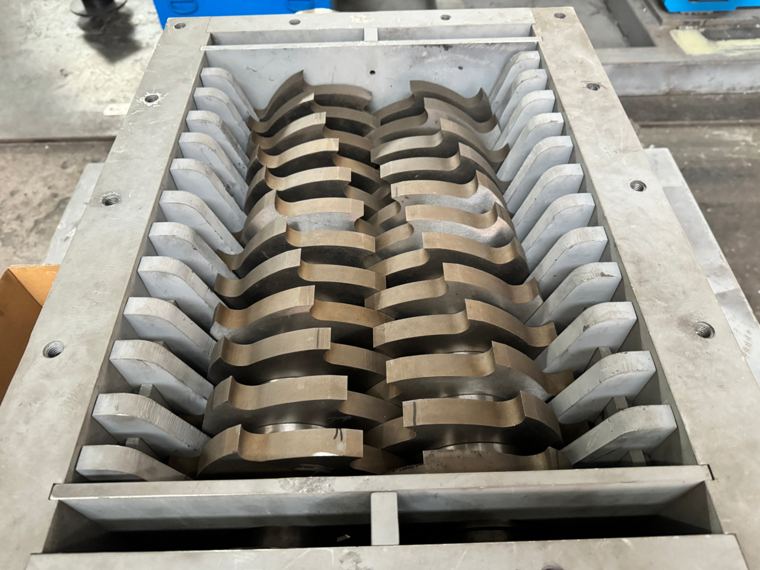
- Low speed, high torque, low noise. Tough and bulky material is torn rather than cut at high speed.
- PLC control. Automatic start and stop, reverse, and automatic reverse on overload to clear jams.
- Blades for your material. One, two, four or more claws per blade, 10 to 80 mm thick, mounted as a fixed set or individually replaceable.
| Series | XD-E double-shaft shredder |
| Output | 500 – 1,500 kg/h |
| Blade thickness | 10 – 80 mm |
| Control | PLC, auto-reverse on overload |
Single-shaft shredder: models 600 to 1500
Breaks plastic lumps, purgings, pipes, profiles, crates and film rolls into pieces before washing or pelletizing. The same machine is also used for wood and biomass, industrial and solid waste, and corrosive waste. Output is 200 to 1,500 kg/h, depending on the model and the material.
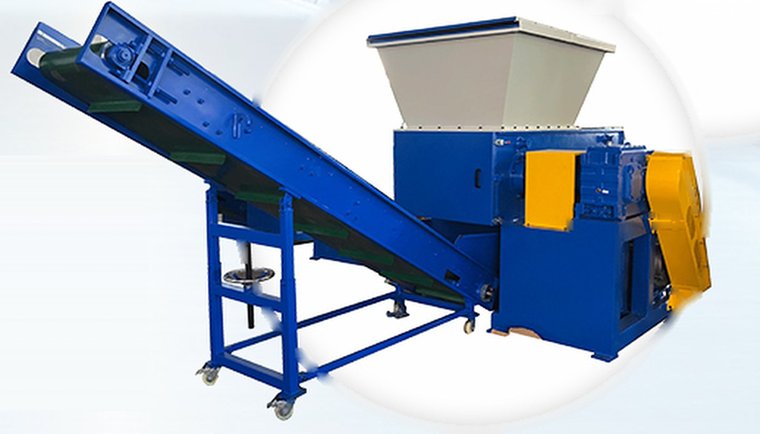
| Type | Single-shaft shredder |
| Models | 600 · 800 · 1000 · 1200 · 1500 |
| Output | 200 – 1,500 kg/h |
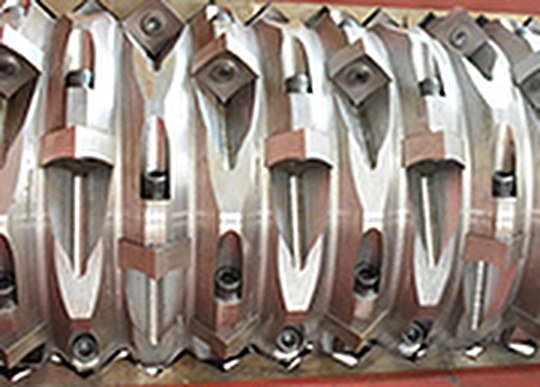
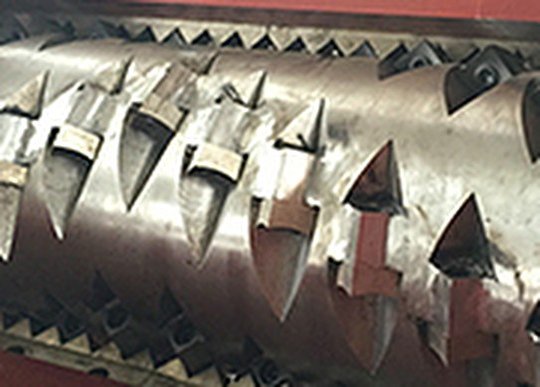
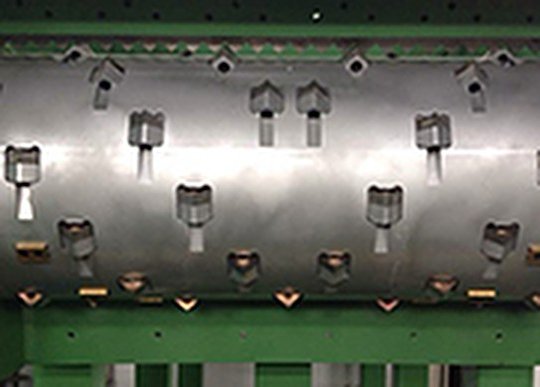
Single or double shaft? It depends on the material. Some materials can only be shredded on a single-shaft machine, others only on a double-shaft machine. Send a photo of your material and we will tell you which one fits.
Single-shaft shredder rotors:
Pelletizer
Cuts the extruded strands or melt into uniform pellets at the end of the pelletizing line. The cutting method is matched to the material and output.
Send a sample photo first. A photo of your material, the final use of the pellets and the output you need is enough for a first configuration and price range.
Tell us your material and target output
Send the material type, output in kg/h and final product. We reply within 24 hours with a configuration and price range.
- WhatsApp: +86 130 1820 8126
- Email: meng@torqplas.com
- Email: purui09@purui-china.com