Post-consumer HDPE bottles, such as milk, detergent and shampoo bottles, are one of the most valuable rigid streams to recycle. Natural and white HDPE pellets sell well, but only if they are clean, free of odour and stable enough to go back into blow moulding or injection moulding. This guide explains what makes HDPE bottles a different job from film, how the washing and pelletizing are set up, and what we learned on a food-grade milk bottle project.
Why HDPE bottles need their own setup
- Residue and odour. Milk protein and detergent remain in the bottles. Milk residue turns sour in the melt unless it is washed out and degassed properly.
- Caps and labels. Bottles come with caps, usually PP, and paper or plastic labels. Labels and glue that survive washing end up on the screen of the extruder.
- Colour is the value. A natural or white pellet is worth more than a mixed colour, and any burning or black spots destroy that value.
- Stable melt flow. Pellets that go back into blow moulding need a consistent melt flow index from batch to batch.
- Light, irregular flakes. Bottle flakes are light and uneven in shape, so they tend to bridge in a plain hopper and starve the screw.
Size reduction and washing
Bales are opened and the bottles are crushed into flakes, usually in a crusher with water feed. Large or bulky rigid parts can be shredded first: a single-shaft shredder (200–1,500 kg/h) or an XD-E double-shaft shredder (500–1,500 kg/h), depending on the material. Send a photo and we will tell you which one fits.
Washing removes residue, labels and dirt. In water, HDPE and PP both float, while heavier plastics, metal and stones sink, so floating separation takes out the heavy fraction but does not separate HDPE from PP caps. How the washing stages are configured for rigid bottles is set with the factory for each project, based on how dirty the bottles are and what the pellets will be used for.
Pelletizing: SJ single-stage or two-stage
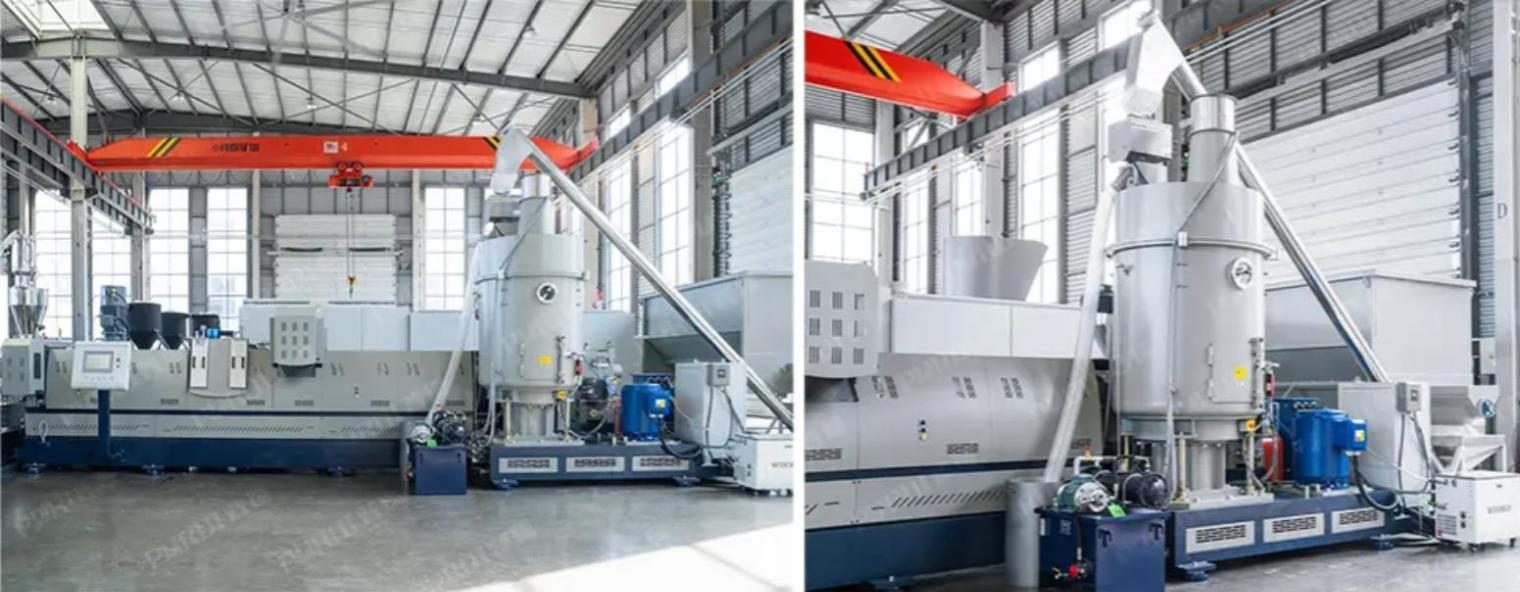
Washed HDPE flakes are pelletized on the Jiangsu PURUI SJ series single-screw recycling extruder. A single-stage line is enough for clean flakes going into less demanding products. For odour-sensitive or food-contact grades, a two-stage line splits the work: the first extruder melts and degasses, the second filters again and pelletizes.
- Forced side feeding keeps a constant, pressurised flow of light flakes into the first extruder instead of letting them bridge in the hopper.
- A low-shear screw avoids overheating the HDPE, which protects chain length and keeps the colour white instead of yellow.
- Vacuum degassing pulls out residual moisture and volatiles that cause odour.
- Two-stage filtration: coarse contamination is removed in the first stage, fine filtration with a hydraulic screen changer down to 80–100 μm in the second.
- A laser filter is an option for heavy contamination such as paper labels, or for outputs from about 800 kg/h. See the screen changer guide.
| Model | Screw diameter (mm) | Output (kg/h) |
|---|---|---|
| SJ100 | 100 | 250 – 350 |
| SJ120 | 120 | 300 – 400 |
| SJ140 | 140 | 500 – 600 |
| SJ150 | 150 | 600 – 800 |
| SJ160 | 160 | 800 – 1,000 |
| SJ180 | 180 | 900 – 1,200 |
| SJ200 | 200 | 1,000 – 1,500 |
All SJ models run at 10 to 150 r/min with an L/D of 18 to 42. Output always depends on the material, its moisture and the motor configuration.
Project example: food-grade HDPE milk bottle flakes
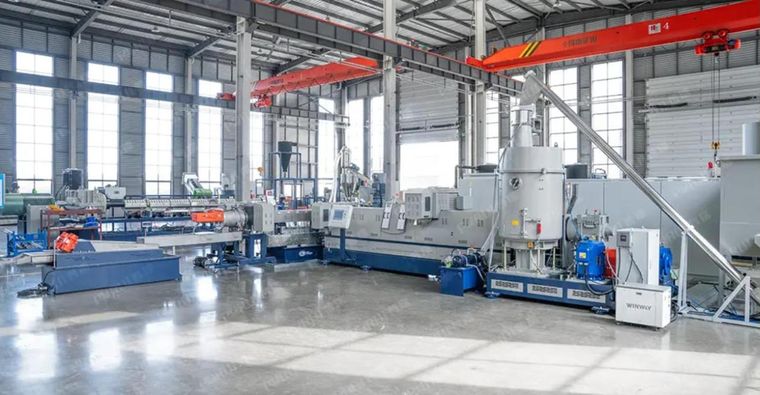
In this Jiangsu PURUI project (China, March 2026), the material was post-industrial and post-consumer HDPE milk bottles supplied as pre-washed flakes. The goal was white or ivory pellets with a stable melt flow index, clean enough to go back into blow-moulded bottles. The line was an SJ110 + TSSK75 two-stage configuration with forced side feeding, a low-shear screw, vacuum degassing and a hydraulic screen changer at 80–100 μm.
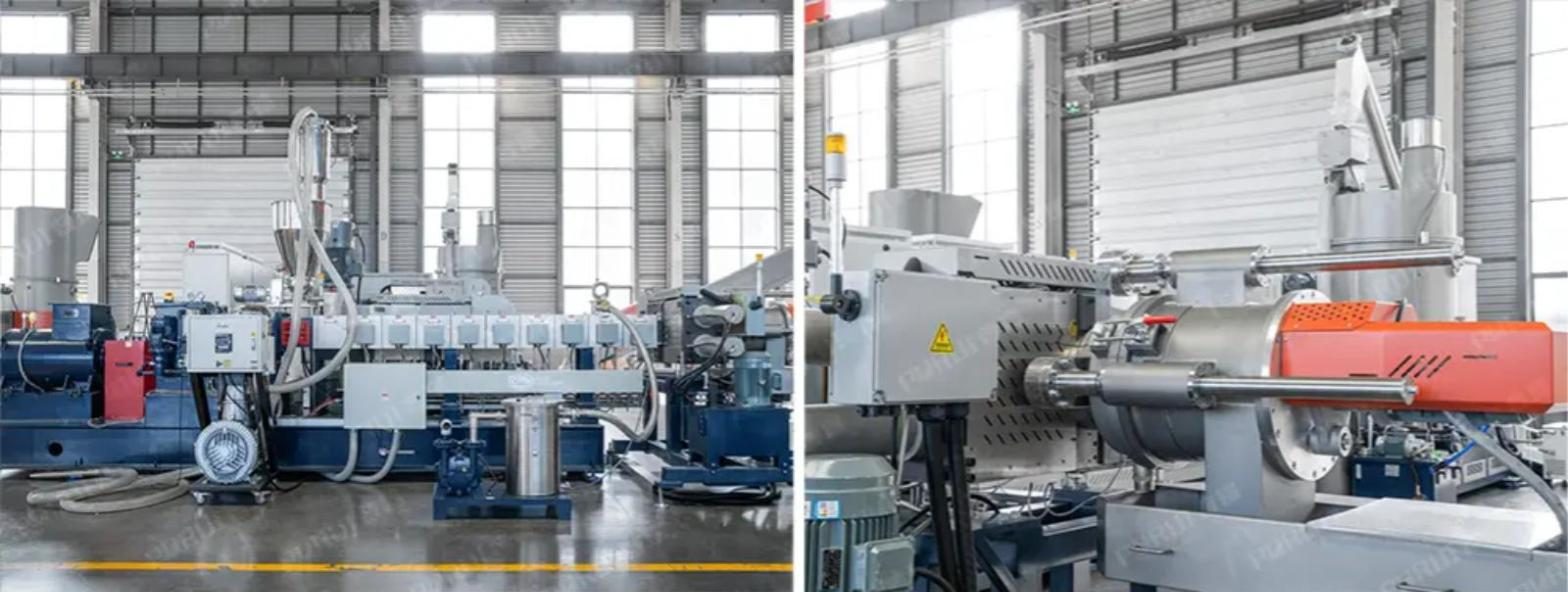
Results reported by Jiangsu PURUI: the pellets passed the customer's sensory test for residual odour, there were no black spots after dead zones in the die head were removed, and the customer replaced 30 % of its virgin HDPE with the recycled pellets. See the full case with video on the recycling machines page.
What to send for a quotation
- Photos of the bottles as you buy them: bales, loose bottles or flakes
- Type of bottles (milk, detergent, others) and colour mix
- Whether you need washing, or already have washed flakes
- Target output in kg/h and working hours per day
- What the pellets will be used for: blow moulding, injection, pipes, crates
- Any odour or food-contact requirement from your customers
Not sure which configuration fits? Try the line selector, or ask the assistant at the bottom left of this page.
Plastic recycling machines by Jiangsu PURUI, manufacturing in Jiangsu since 2006. Contracts are signed directly with the manufacturer; Torqplas handles specification, material trials and project follow-up.
See also: ML or SJ pelletizing line · How to choose a screen changer
Tell us your material and target output
Send the material type, output in kg/h and final product. We reply within 24 hours with a configuration and price range.
- WhatsApp: +86 130 1820 8126
- Email: meng@torqplas.com
- Email: purui09@purui-china.com